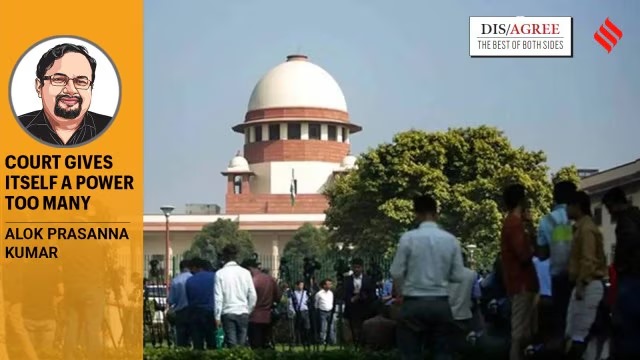
In trying to put an end to the unconstitutional shenanigans of Tamil Nadu Governor R N Ravi and his ilk, the Supreme Court of India in State of Tamil Nadu vs Governor of Tamil Nadu may have unwittingly created new and problematic constitutional issues.
The Court’s judgment on April 8 is unprecedented in at least three ways. First, it has laid down detailed guidelines for how a governor ought to act in refusing assent to a bill or referring it to the president, and given itself the power to issue a mandamus to the governor for failing to act.
Story continues below this ad
Second, it has exercised its powers under Article 142 to hold that the bills the TN governor did not assent to have become law. Third, it has given itself the power to issue a mandamus to the president when a bill has been referred to the president by the governor.
Of these three unprecedented acts, the first two are welcome — they are the Court’s latest attempt to check the unconstitutional behaviour of a governor who behaved more like a colonial viceroy than a constitutional authority.
The circumstances in which the Tamil Nadu government was forced to bring this case were extraordinary. The governor simply refused to give assent to 12 bills lawfully passed by the state legislature. When pushed by the court in an earlier round of litigation, he referred two of the bills to the president for her assent and simply returned 10 to the state legislative assembly without giving assent. When the 10 bills were passed again in the Assembly, he referred all of them to the president for her assent raising various grounds of constitutionality.


The government’s assurance to the Supreme Court Thursday that it would pause the two contentious provisions in the Waqf Act, 2025 — the concept of ‘waqf by use’ and inclusion of non-Muslims on waqf boards — is the latest in a series where the Centre has forestalled an adverse judicial order.
On April 16, the three-judge bench headed by the Chief Justice of India had, in oral observations, indicated that it was considering staying at least three key provisions. However, Solicitor General Tushar Mehta sought to buy time, requesting the Court to hear at least two more lawyers on behalf of the Centre. The bench agreed, adding that it would pass orders after hearing them.